Thyroid problems can affect your energy levels, weight, mood, heart rate, sleep, and overall health. A thyroid test is commonly recommended when symptoms suggest that the thyroid gland may not be functioning normally.
The most commonly evaluated thyroid hormones are TSH, T3, and T4. Understanding what these tests measure and what their normal ranges mean can help you discuss your results with your doctor.
If you are looking for a thyroid test in Kandivali, a thyroid profile can help evaluate thyroid function and identify possible abnormalities that may require further medical evaluation.
Important: Normal ranges can vary between laboratories, testing methods, age groups, pregnancy status, and individual circumstances. Always interpret your report according to the reference range printed by your laboratory and your doctor’s advice.
What Is a Thyroid Test?
A thyroid test is a blood test used to assess how well the thyroid gland is functioning. The thyroid is a small, butterfly-shaped gland located in the front of the neck.
It produces hormones that influence several important functions of the body, including:
- Metabolism
- Energy levels
- Body temperature
- Heart rate
- Digestion
- Brain and nervous-system function
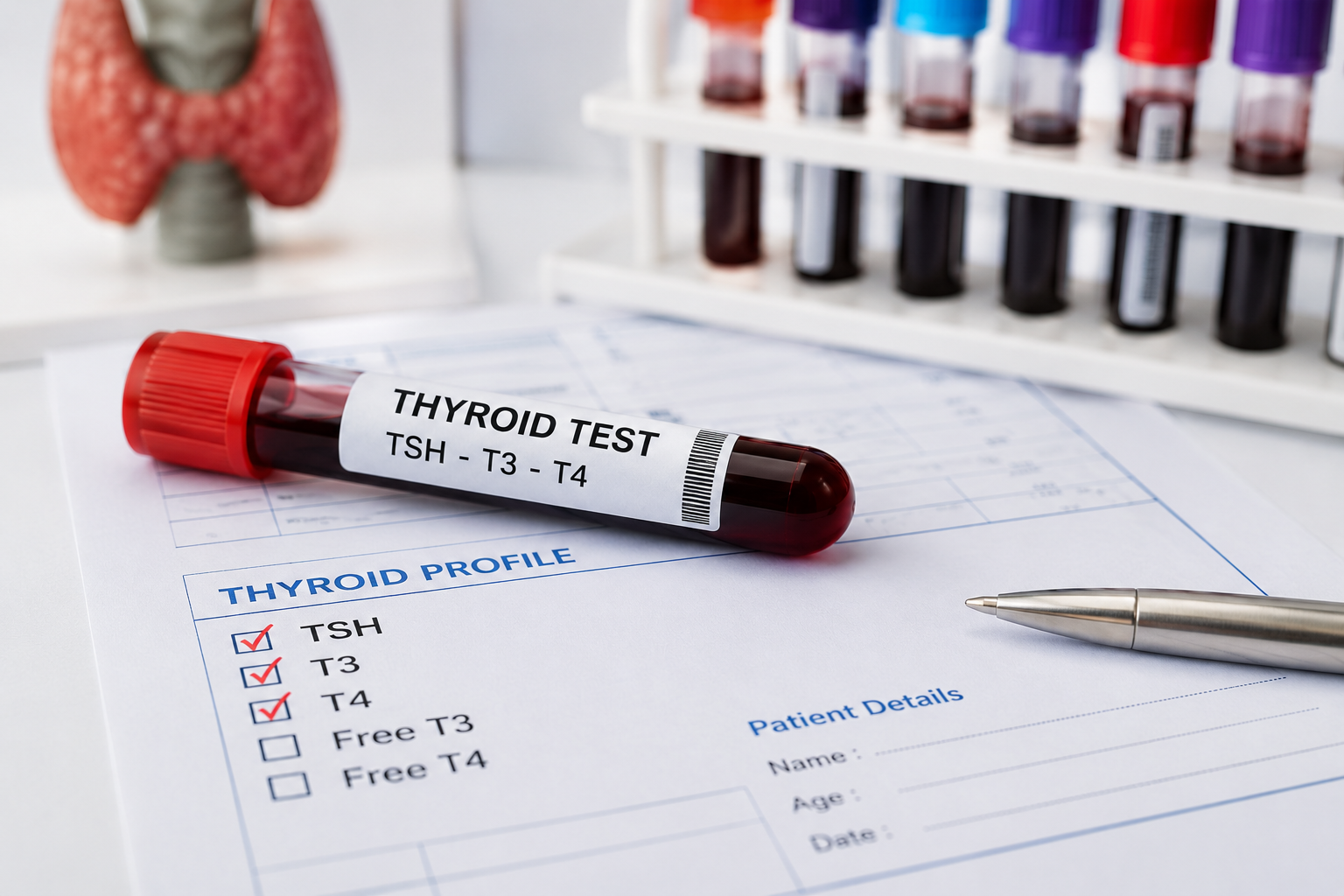
A thyroid profile test may include TSH, T3, and T4 measurements. Depending on the patient’s symptoms and medical history, a doctor may recommend additional thyroid-related tests.
What Are TSH, T3 and T4?
TSH – Thyroid-Stimulating Hormone
TSH is produced by the pituitary gland and helps regulate thyroid hormone production.
TSH is often one of the first tests used to evaluate thyroid function.
In general:
- Higher-than-normal TSH may be associated with an underactive thyroid.
- Lower-than-normal TSH may be associated with an overactive thyroid.
However, TSH should not be interpreted in isolation in every situation.
T3 – Triiodothyronine
T3 is one of the main thyroid hormones. It plays an important role in regulating metabolism and energy use.
T3 may be measured when a doctor needs additional information about thyroid function, particularly when hyperthyroidism is suspected.
T4 – Thyroxine
T4 is the main hormone produced by the thyroid gland. It is converted into T3 in different tissues of the body.
Doctors may evaluate free T4 (FT4) or total T4 depending on the clinical situation and laboratory testing method.
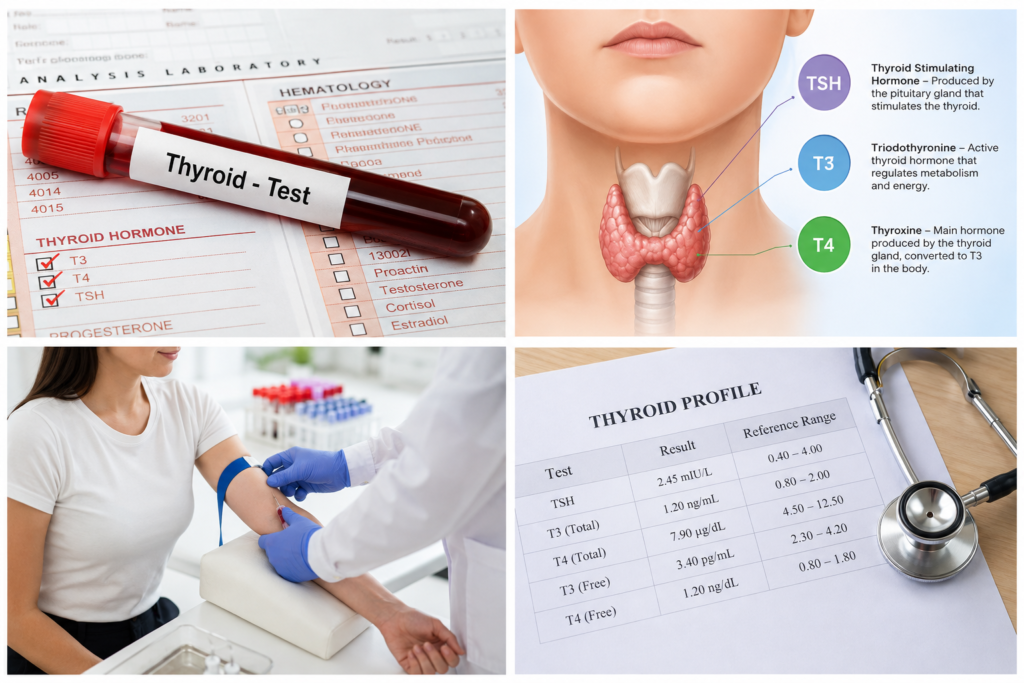
TSH, T3 & T4 Normal Range
The reference range can differ from one laboratory to another. Therefore, the range printed on your laboratory report should be considered when interpreting your result.
A commonly used adult reference range may look approximately like this:
| Thyroid Test | Common Adult Reference Range* |
|---|---|
| TSH | Approximately 0.4–4.0 mIU/L |
| Free T4 | Approximately 0.8–1.8 ng/dL |
| Total T3 | Approximately 80–200 ng/dL |
*Reference ranges vary between laboratories and testing methods. Always check the reference interval provided on your report.
Why Can Normal Ranges Differ?
Thyroid test reference ranges may vary because of:
- Laboratory testing methods
- Age
- Pregnancy
- Medications
- Medical conditions
- Individual laboratory reference standards
This is why a thyroid result should be interpreted together with your symptoms, medical history, and other test results.
What Does a High TSH Level Mean?
A high TSH level can be associated with an underactive thyroid, also called hypothyroidism.
Possible symptoms of hypothyroidism can include:
- Tiredness
- Feeling unusually cold
- Weight gain
- Dry skin
- Constipation
- Difficulty concentrating
- Changes in mood
- Hair changes
However, these symptoms can occur for many other reasons. A high TSH result does not automatically mean that a person has hypothyroidism.
Doctors may consider TSH together with Free T4 and other clinical information.
What Does a Low TSH Level Mean?
A low TSH level can occur when the thyroid is producing too much thyroid hormone, which may be associated with hyperthyroidism.
Possible symptoms include:
- Unexplained weight loss
- Fast heartbeat or palpitations
- Increased sweating
- Feeling unusually warm
- Trembling
- Anxiety or restlessness
- Difficulty sleeping
Further testing may be needed to determine the underlying cause.
When Should You Consider a Thyroid Test?
A doctor may recommend thyroid testing if you have symptoms that could be related to thyroid dysfunction.
Common reasons for testing may include:
1. Unexplained Weight Changes
Unexpected weight gain or weight loss may sometimes be associated with thyroid dysfunction.
2. Persistent Tiredness
Unusual or persistent fatigue can have many causes, including thyroid disorders.
3. Changes in Heart Rate
An unusually fast or slow heartbeat can sometimes occur with thyroid abnormalities.
4. Changes in Menstrual Cycle
Thyroid dysfunction can affect menstrual patterns in some people.
5. Neck Swelling
A swelling or lump in the neck may require medical evaluation.
6. Previous Thyroid Problems
People with a history of thyroid disease may require periodic thyroid function testing as advised by their doctor.
What Is a Thyroid Profile Test?
A thyroid profile test generally refers to a group of blood tests used to evaluate thyroid function.
Depending on the laboratory and doctor’s recommendation, it may include:
- TSH
- T3
- T4
- Free T3
- Free T4
The exact combination depends on the patient’s clinical requirements.
If you are searching for a thyroid profile test in Kandivali, check with the diagnostic laboratory regarding which parameters are included in the test package.
How Is a Thyroid Test Done?
A thyroid test is usually performed using a blood sample.
Step 1: Test Registration
Your details and test information are recorded at the diagnostic centre.
Step 2: Blood Sample Collection
A trained healthcare professional collects a small blood sample, usually from a vein in the arm.
Step 3: Laboratory Testing
The sample is processed using laboratory testing equipment.
Step 4: Report
The results are provided with the laboratory’s reference ranges. Your doctor can then interpret the results in relation to your symptoms and medical history.
Do You Need Fasting for a Thyroid Test?
Fasting requirements can depend on the specific tests ordered.
For a thyroid test alone, fasting may not always be required. However, if your doctor has prescribed thyroid testing along with other blood tests, fasting may be necessary.
It is best to confirm preparation requirements with the diagnostic centre before visiting.
Thyroid Test in Kandivali
If you are searching for a thyroid test near Kandivali, choose a diagnostic centre that provides reliable laboratory testing, proper sample collection, and clear reports.
People in Kandivali West, Kandivali East, Borivali, Malad and nearby Mumbai areas may consider a convenient diagnostic centre based on location, test availability, reporting time, and doctor recommendations.
For a thyroid test, ask whether the required parameters such as TSH, T3, T4, Free T3 or Free T4 are included in the prescribed test.
Frequently Asked Questions About Thyroid Tests
What is the normal TSH range?
A commonly used adult TSH reference range is approximately 0.4–4.0 mIU/L, but the exact range varies between laboratories. Always check the reference range printed on your report.
What is a normal T3 level?
A commonly used reference range for total T3 in adults is approximately 80–200 ng/dL. Laboratory reference ranges may differ.
What is a normal T4 level?
For Free T4, a commonly used adult reference range is approximately 0.8–1.8 ng/dL, although the laboratory’s own reference range should be used.
Is a thyroid test done through blood?
Yes. Thyroid function tests such as TSH, T3 and T4 are generally performed using a blood sample.
Can I do a thyroid test without a doctor’s prescription?
Testing policies can vary between diagnostic centres. However, discussing symptoms and test requirements with a doctor is recommended, particularly if you have abnormal results or ongoing symptoms.
How often should thyroid tests be done?
The frequency depends on your health condition, treatment, symptoms, age and doctor’s advice. People taking thyroid medication may require periodic monitoring.
Can thyroid problems be treated?
Many thyroid disorders can be effectively managed with appropriate medical treatment. The treatment depends on the specific thyroid condition and should be decided by a qualified healthcare professional.
Conclusion
TSH, T3 and T4 are important tests used to evaluate thyroid function. An abnormal thyroid test result does not always provide a diagnosis by itself, so results should be interpreted using the laboratory reference range and your overall clinical condition.
If you are looking for a thyroid test in Kandivali, you can contact a nearby diagnostic centre to check test availability, preparation requirements and reporting details.
Do not start, stop, or change thyroid medication based only on a laboratory report. Discuss your results with your doctor.